Visit in person
Laëtitia Maybank, A'26
Some structures outlast the civilizations that raised them. The Parthenon and the Colosseum have endured for millennia. Both survive today as ruins, drawing in a combined eleven million visitors per year. These structures have survived conquests and conversions, bombardments and plunder, as well as reverence and indifference. It is these trials that lend ruins their significance.
In the mid-5th century BC, the Athenians built the Parthenon as a treasury and temple to Athena. The Parthenon stood essentially intact for two thousand years, but its function adapted. Christians converted it into a Byzantine church in the 6th century; Crusaders then converted it into a Latin cathedral in the 13th; finally, the Ottomans converted it into a mosque in the 15th. The Parthenon might have survived indefinitely, had the Venetians not lobbed a mortar into it in 1687, igniting the gunpowder the Ottomans had stored inside, thus blowing out the roof and interior walls. As if the Parthenon had not endured enough, from 1801 to 1812, a Scottish nobleman, Lord Elgin, removed some of the remaining sculptural elements.
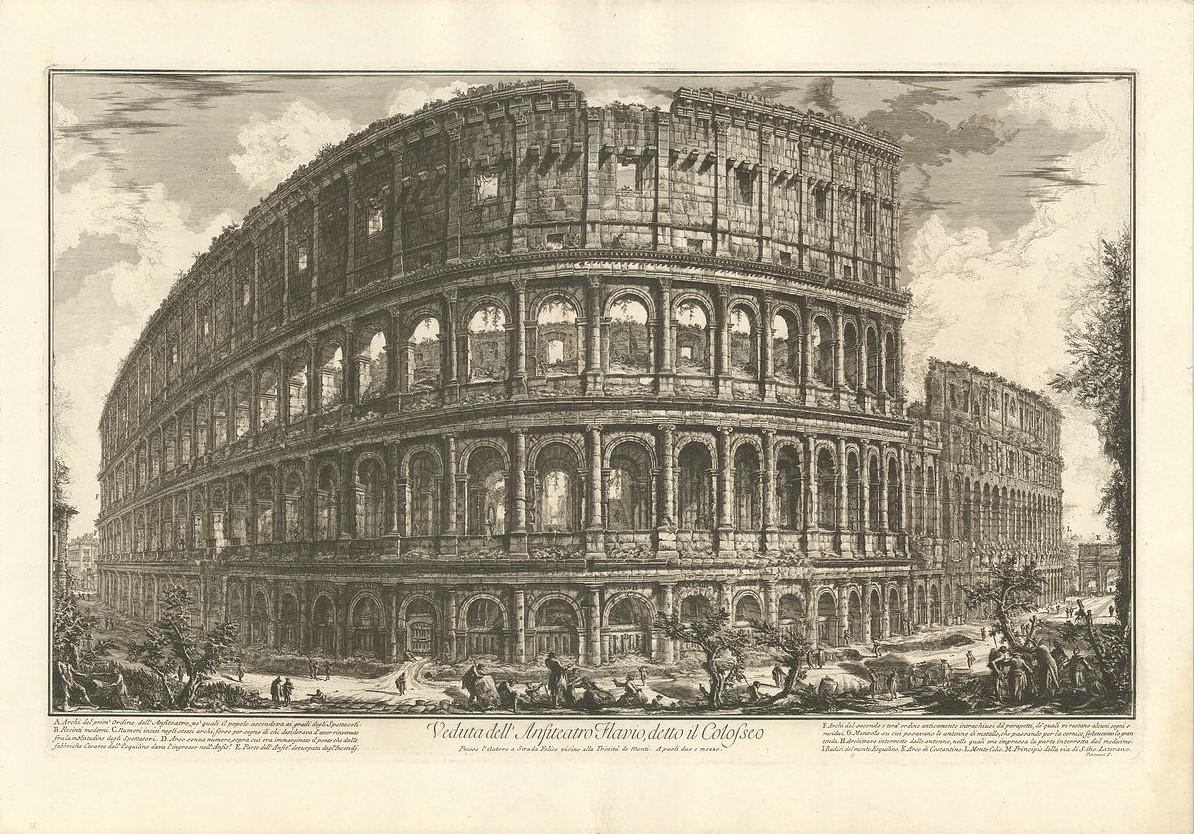
The Colosseum was built by the emperors Vespasian and Titus; they opened it in AD 80, with one hundred days of games. For four centuries it hosted gladiatorial combat, animal hunts, and public executions, but use declined through the centuries. Christian emperors disapproved of the violence – as well as the cost of upkeep – and by 523 the last recorded games had been held. After that, the building simply sat there. A patrician family fortified it as a castle in the 13th century, but abandoned it in the 14th when an earthquake collapsed much of the southern wall. The Colosseum then became a quarry, with the Papacy designating the stones to build St. Peter’s, the Palazzo Farnese, and a half-dozen other landmarks. What finally saved the amphitheater was a story, possibly untrue, that early Christians had been martyred there. In 1749, Pope Benedict XIV declared the Colosseum sacred and forbade any further quarrying.