Tisch Library's "Affordable Course Materials Profiles" feature interviews with faculty & instructors who have received an Affordable Course Materials Award.
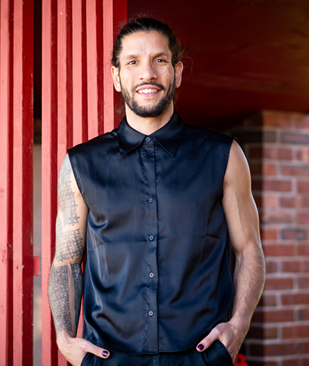
This interview is with Professor Fernando Salinas-Quiroz, Assistant Professor in the Eliot-Pearson Department of Child Study & Human Development. Professor Salinas-Quiroz received an award for Fall 2025.
What department do you teach in? Which classes do you most commonly teach?
I teach in the Eliot-Pearson Department of Child Study and Human Development. I have taught courses including Qualitative and Ethnographic Methods in Applied Social Science Research, Gender Development: Deconstructing, Demystifying, and Reimagining the Gender Binary, and Contemporary Families in the 21st Century.
Briefly describe your project to use or create more affordable course materials for students.
My project centers on designing and teaching Qualitative and Ethnographic Methods in Applied Social Science Research using entirely no-cost materials. The course relies on open-access journal articles, publicly available datasets, guidance documents, and instructor-created materials, ensuring that students never have to purchase textbooks or proprietary resources.
What motivated you to use these new materials?
Coming from the Majority World, I am deeply aware of how financial barriers shape who gets to participate in higher education. I designed this course with the conviction that no student should have to pay to learn. My motivation was to align my teaching with principles of access, equity, and the belief that knowledge should not be gated by privilege.
How were students impacted by the new materials? What was their reaction?
Students responded very positively. Many expressed relief and appreciation at not having to purchase expensive textbooks, and they valued having immediate access to all materials from the first day of class. The open-access resources also helped students feel more engaged and empowered, knowing they could continue accessing these materials beyond the course.
What was your experience incorporating these new materials into your course? How did the Tisch award support your work? Were there challenges?
Designing a course around no-cost materials required thoughtful planning, including identifying high-quality open-access resources, adapting assignments, and ensuring students did not need proprietary software. The Tisch Award was essential in supporting this work by providing time and institutional backing to locate, vet, and integrate these materials. Collaboration with Tisch Library staff, especially around resource discovery and copyright navigation, was invaluable!
Do you have any advice for other faculty considering a switch to open and affordable course content?
I would encourage faculty to start with intention rather than perfection. Open and affordable materials offer an opportunity to rethink not just costs, but pedagogy. Partnering with librarians and starting small can make the process manageable, and the impact on students is well worth the effort.