The Office of the Vice Provost for Institutional Inclusive Excellence is hosting the 6th annual Juneteenth celebration: "Roots & Rhythm: Honoring the Past, Creating the Future" on Wednesday, June 17, 11:30AM-2:00PM (event information). The celebration will feature keynote speaker, Dr. Jamila Lyiscott, Professor of Social Justice Education & Co-founder of the Center of Racial Justice and Youth Engaged Research at UMASS Amherst.
On this page, you'll find research by Dr. Jamila Lyiscott, on the history and present of Juneteenth, related research from Tufts faculty and from the Center of Racial Justice and Youth Engaged Research, books on democracy, American history, and civic action, and some of the sources mentioned in Black Appetite, White Food.
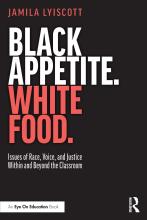
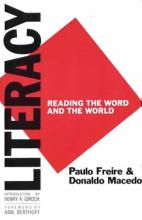
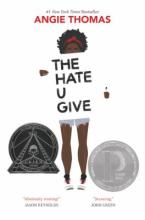
A mix of poetry, memoir, critical pedagogy, and practical tips for the classroom, Dr. Lyiscott's Black Appetite, White Food bridges the theory/praxis divide for educators striving to incorporate culturally sustaining pedagogy into their classrooms. The short text is split between Part 1 "Naming the Problem," and Part 2 "Tools for Analysis and Action." She weaves examples from Harry Potter, the Hate U Give, Paolo Freire, Ngũgĩ wa Thiongʼo, and her own poetry throughout the text, and concludes each chapter with classroom exercises and activities. As Kimani I. Mitchell writes in her 2020 review of the book in Multicultural Perspectives: "Jamila Lysicott presents a text that expands the field of social justice education and gives educators a push to be better."

For many years, Dr. Lyiscott edited this journal, which features peer-reviewed articles and analytical essays on topics related to justice in education, particularly in the K-12 context in the U.S. and globally. The journal's own editorial practices affirm a commitment to justice. They use Anti-Racist Scholarly Reviewing Practices, encourage authors to consider their own positionality, and "welcome submissions that use humanizing and critical methodologies, employ critically conscious citational practices, and/or disrupt “standard” American language practices" (Aims and Scope).
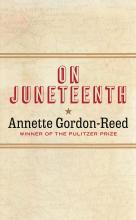
A slim, moving collection of essays from historian Annette Gordon-Reed that mixes memoir, politics, and the history of Texas, to explore larger themes in American history. Read Dr. Kerri Greenidge's review in the New Republic.
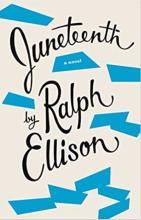
This novel was incomplete at Ellison's death in 1994, but edited and published in 1999. The review in the African American Intellectual History Society's website Black Perspectives, recommends all Americans should read the text aloud every Juneteenth.
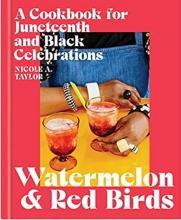
A gorgeous cookbook with mouthwatering recipes and moving reminiscences of past Juneteenth celebrations. Hibiscus snow cones! Grilled watermelon with chamomile-cocoa salt! Check out a few sample recipes by Nicole A. Taylor in Food & Wine.
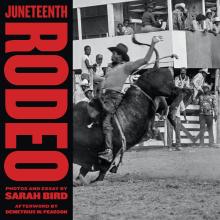
A photo book documenting life at the black rodeos of Texas between 1977 and 1982. Many of the images in the book are from Juneteenth celebrations at the rodeo.
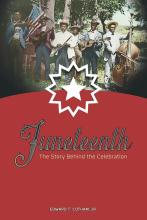
While the book mostly focuses on the historical circumstances surrounding the delivery of the General Order No. 3 in Galveston, TX on June 19, 1865, there's a chapter on the legacy of Juneteenth and its role as a holiday in Texas.
A new work on how Americans practice democracy in everyday life.
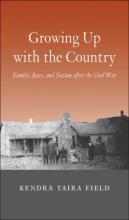
A family history of Black migration and freedom after emancipation.
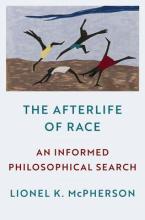
Philosophical exploration of race, justice, and inequality.


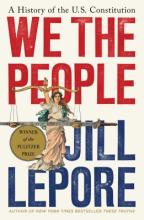
Read the Tufts Now story on Jill Lepore's (class of J87) visit to Tufts this spring to talk about this book, civic engagement, and the Constitution.
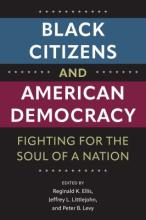
Check out Dr. Keisha Green's chapter: "Black Youth Speak Truth to Power: Literacy for Freedom, Community Radio, and Civic Engagement" and other great chapters on youth civic engagement.
Includes a chapter by Dr. Sangeeta Kamat: "The Privatization of Public Interest: Theorizing NGO Discourse in a Neoliberal Era."